History and wins

We are the next knot in the thread.

The people who came before us did not know whether they would win. They organized anyway.

Because they did, millions of workers inherited the eight-hour day, the forty-hour week, overtime pay, paid time away from work, safer workplaces, and a collective voice on the job. None of it appeared on its own. Ordinary people stood together, carried unfinished demands forward, and made what once seemed impossible feel ordinary.

The work of labor is a continuous thread. Every generation inherits its victories, its sacrifices, its lessons, and the work it could not finish.

That thread has reached us.

As VES workers, we are not starting from nothing—and we are not standing outside this history. We are the next knot in the thread: workers deciding what we will carry forward and what we will leave for those who come after us.

What collective action changed

Five victories the thread carried forward.

They shape working life now—and each began with people acting together.

8 hours

A life beyond work

A demand carried from local strikes to a national movement and, piece by piece, into law and contracts.

40 hours

A national standard

For covered workers, overtime after forty hours made endless work more costly and time more valuable.

Paid time

Rest without losing a paycheck

Unions helped make paid vacations, holidays, and leave normal contract demands—even though federal law still does not guarantee most of them.

Safety

A public responsibility

Workers made injury, illness, and death on the job matters of enforceable public concern.

A voice

The right to act together

Collective bargaining gave millions a structured way to negotiate instead of facing workplace-wide decisions alone.

A five-minute history

Follow the thread in nine stops.

This short path gives the throughline. The complete sourced timeline follows below for readers who want the evidence and the people behind it.

1647Democratic rootsThe Levellers forced representation and consent into public debate.
1835Workers win time backPhiladelphia trades won a citywide ten-hour standard.
1866–1890A national movement formsThe NLU, Knights, and AFL tested ways to build durable worker power.
1877–1894The railroad warsRail workers showed how a national system could create national leverage.
1886The Haymarket MassacreThe eight-hour movement and state repression reshaped labor memory.
1911–1921The sacrifice came firstTriangle, Ludlow, and Blair Mountain exposed industrial power’s human cost.
1935–1970Demands become enforceableBargaining, overtime, shorter hours, and safety became standards.
1981–1997Rights weaken—but power survivesPATCO marked retreat; the UPS strike showed workers could still win.
2018–2025Workers begin rebuildingTeachers and newly organized industries made collective action visible again.
Continue into the complete timeline ↓

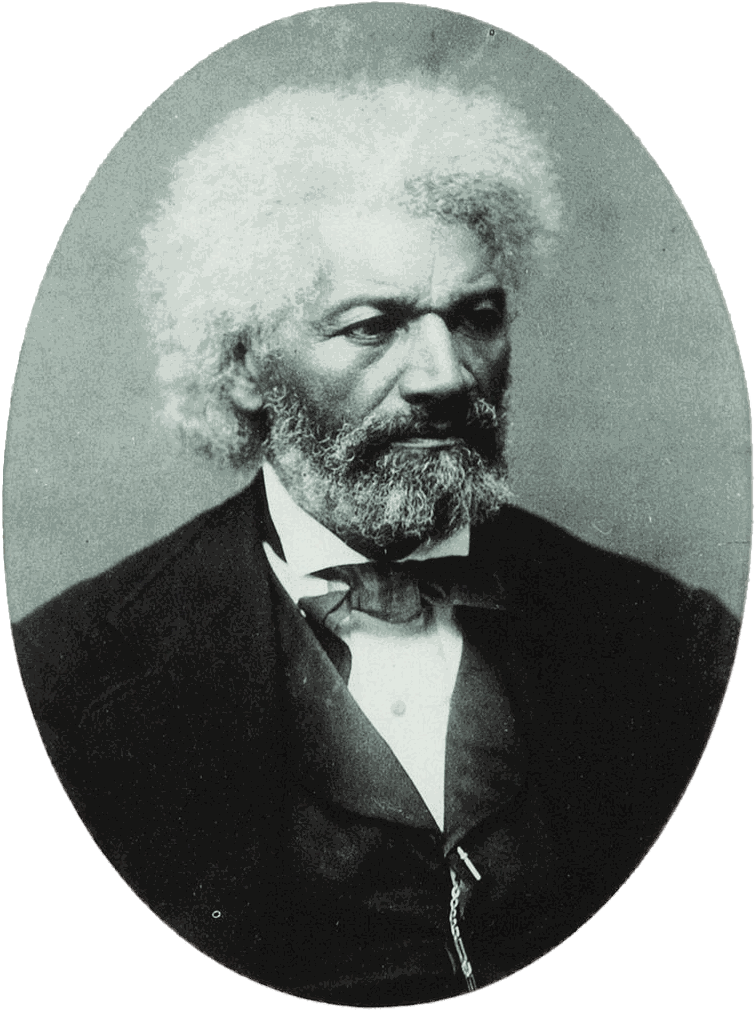
Frederick Douglass · 1857

Formal portrait of Frederick Douglass, seated in a dark suit with white hair and a full beard.
Frederick DouglassPortrait: unattributed via Wikimedia Commons · public domain

“Power concedes nothing without a demand. It never did and it never will.”

West India Emancipation ↗

Workers paid with lost wages and lost jobs. They were blacklisted, evicted, beaten, jailed, and deported. Some were killed by private guards, police, militia, and federal troops. Others died in mines, mills, factories, and fires before the country accepted that their lives were worth protecting.

The laws sometimes came later. The contracts sometimes came later. The sacrifice came first.

The democratic inheritance

Before unions, ordinary people organized for a voice.

Trade unions did not descend directly from these movements. They inherited a democratic question: should people affected by power have a say in how it is used?
  1. Levellers and the Putney Debates

    Ordinary soldiers force England to hear the argument

    The action
    Rank-and-file Army representatives and Leveller-aligned civilians brought proposals for regular elections, more equal representation, religious liberty, and rights government could not simply remove into the Putney Debates.
    The result
    The most democratic proposals were rejected, the movement was suppressed, and England did not adopt the Levellers’ constitutional program.
    What endured
    They left an early written program grounded in popular consent—and an extraordinary record of ordinary soldiers debating the political order with their commanders.
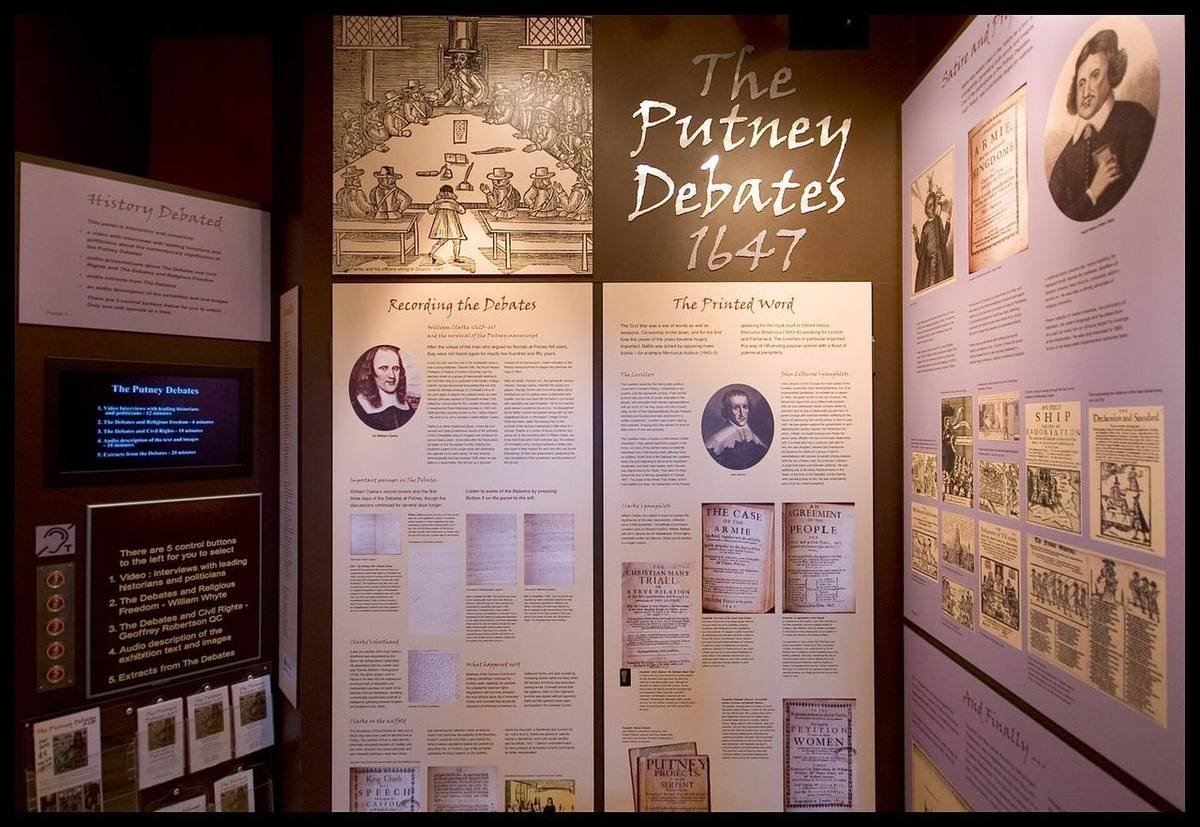
    The permanent Putney Debates exhibition inside St Mary’s Church in Putney.
    The permanent Putney Debates exhibition inside St Mary’s Church in Putney.Image: George Rex · CC BY-SA 2.0
  2. Philadelphia mechanics

    Working trades turn revolutionary language into public power

    The action
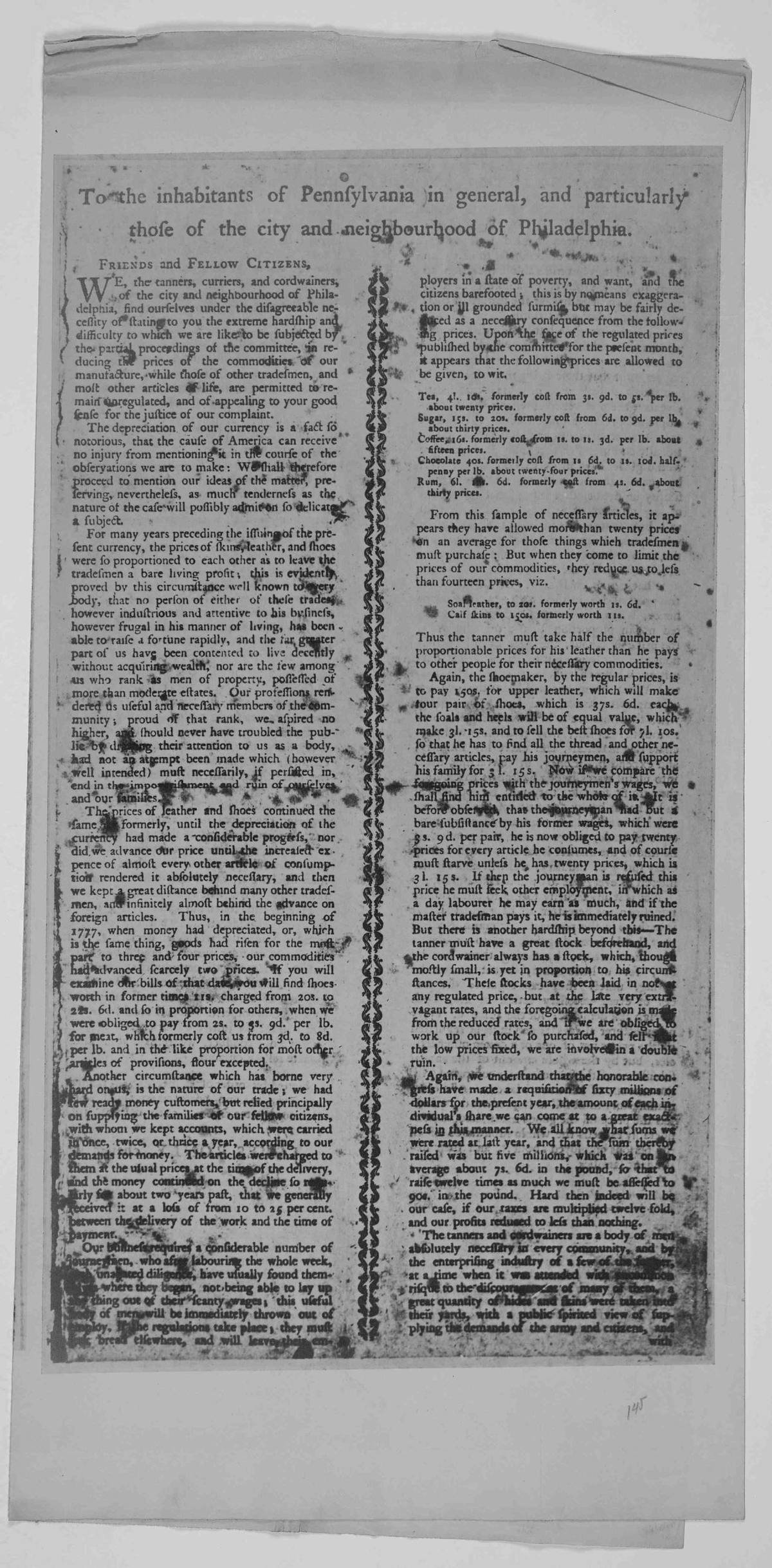
    Philadelphia mechanics and artisans organized through committees, associations, boycotts, militia companies, and public meetings. In 1779, tanners, curriers, and cordwainers issued a joint appeal about prices, wages, and survival.
    The result
    The broader popular revolt helped produce Pennsylvania’s radical 1776 constitution, which expanded the franchise and enumerated citizens’ rights. The 1779 broadside proves coordinated economic advocacy, though not a documented policy victory of its own.
    What endured
    Workers learned to act publicly through representatives and across trades—a democratic habit later carried directly into workplace organization.
    A 1779 broadside issued by organized Philadelphia trades during the Revolutionary era.
    A 1779 broadside issued by organized Philadelphia trades during the Revolutionary era.Image: Printed Ephemera Collection, Library of Congress · Public domain

Workers organize as workers

Political voice becomes economic power.

Journeymen began organizing not only as citizens or members of a craft, but as wage earners with shared interests.
  1. Philadelphia cordwainers

    One of the first American trade unions tests the right to combine

    The action
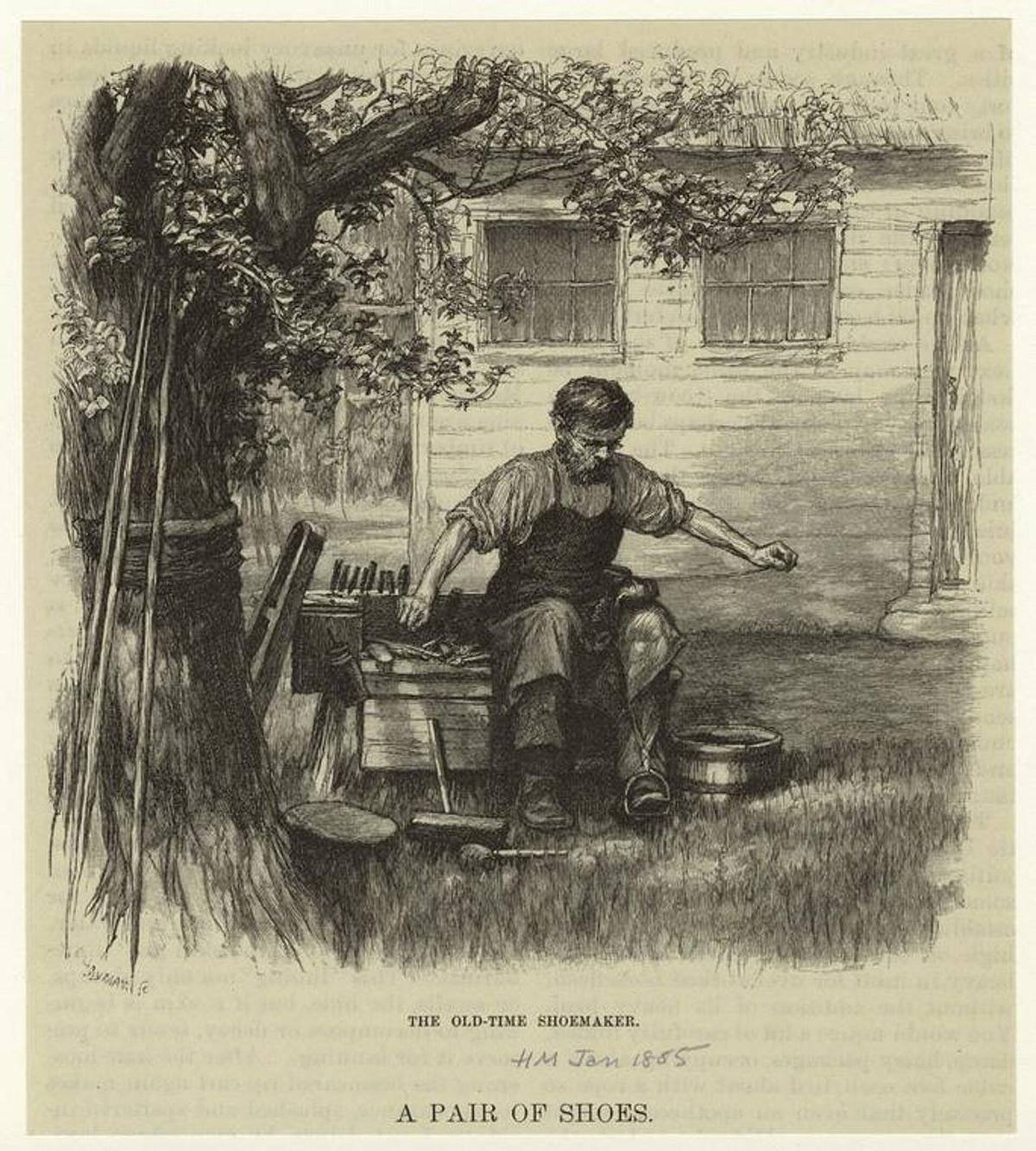
    Journeymen shoemakers organized to defend wage rates and refused to work for masters who undercut them.
    The result
    Their 1799 strike limited a proposed wage reduction. In 1806, organizers were convicted of criminal conspiracy for combining to raise wages.
    What endured
    They demonstrated both the leverage of withholding labor together and the legal counterattack worker organization would face for generations.
    An engraving of an old-time shoemaker working at his bench.
    An engraving of an old-time shoemaker working at his bench.Image: A. Hayman via the New York Public Library · Public domain
  2. A citywide labor movement

    Philadelphia workers win time back from the working day

    The action
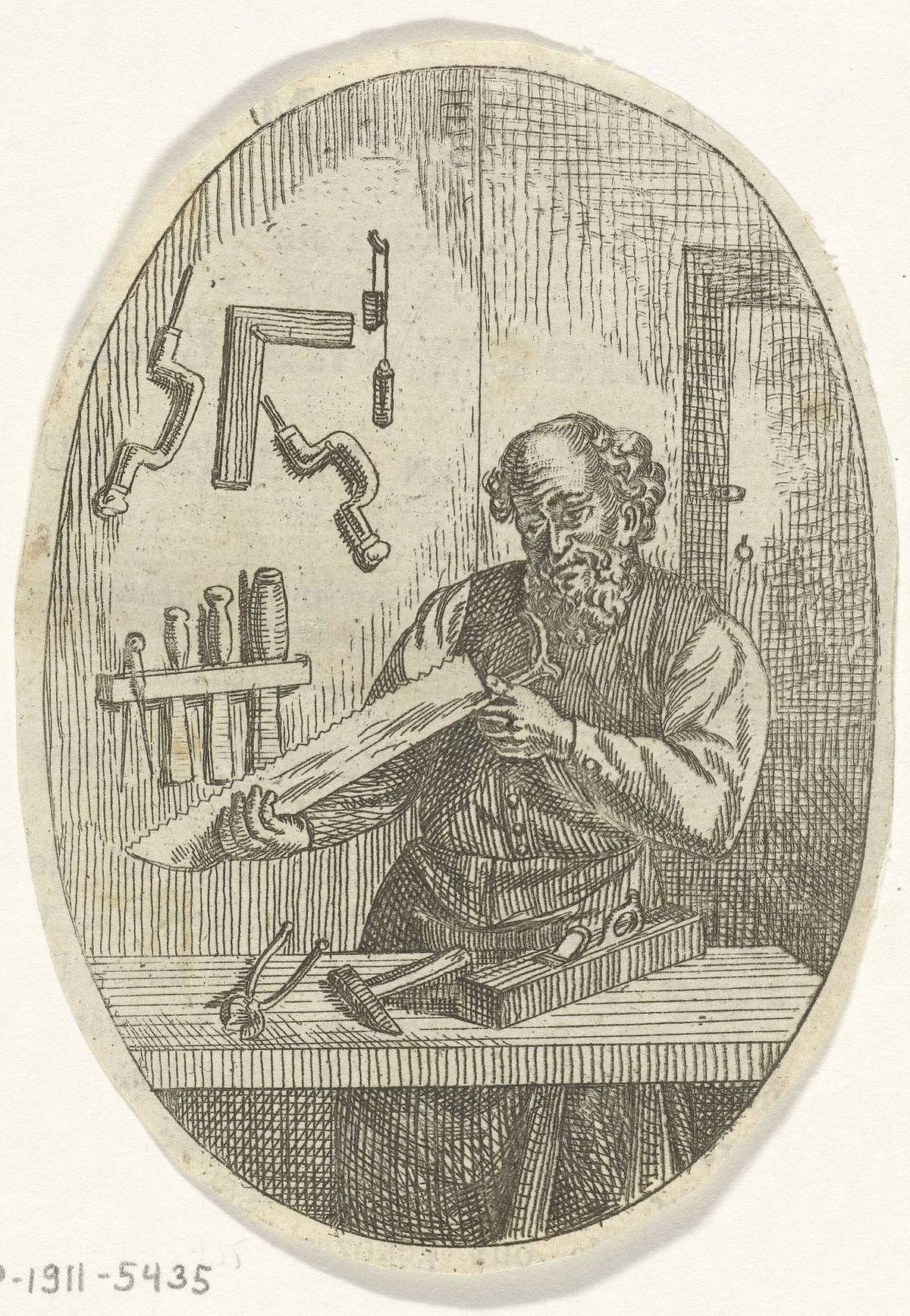
    Trade societies federated, created a labor press and political party, and ultimately coordinated a general strike for a ten-hour day.
    The result
    The 1835 strike won the ten-hour standard across much of Philadelphia. The shorter day spread to federal navy yards and helped inspire action elsewhere.
    What endured
    Workers proved that solidarity across trades could win a citywide standard no individual shop could secure alone.
    An 1830 print of a carpenter at work with hand tools.
    An 1830 print of a carpenter at work with hand tools.Image: Rijksmuseum · CC0

A national movement emerges

Local demands become a national cause.

Workers experimented with competing models: political reform, broad solidarity across occupations, and durable federations of trade unions.
  1. National Labor Union

    The eight-hour demand gets a national organization

    The action
    The first serious national labor federation brought worker organizations together and issued the first national call for an eight-hour day.
    The result
    Congress established an eight-hour day for certain federal workers in 1868, though enforcement and coverage were limited. The NLU did not win the standard throughout private industry.
    What endured
    It turned working time into a national political question and gave the movement its first federal foothold.
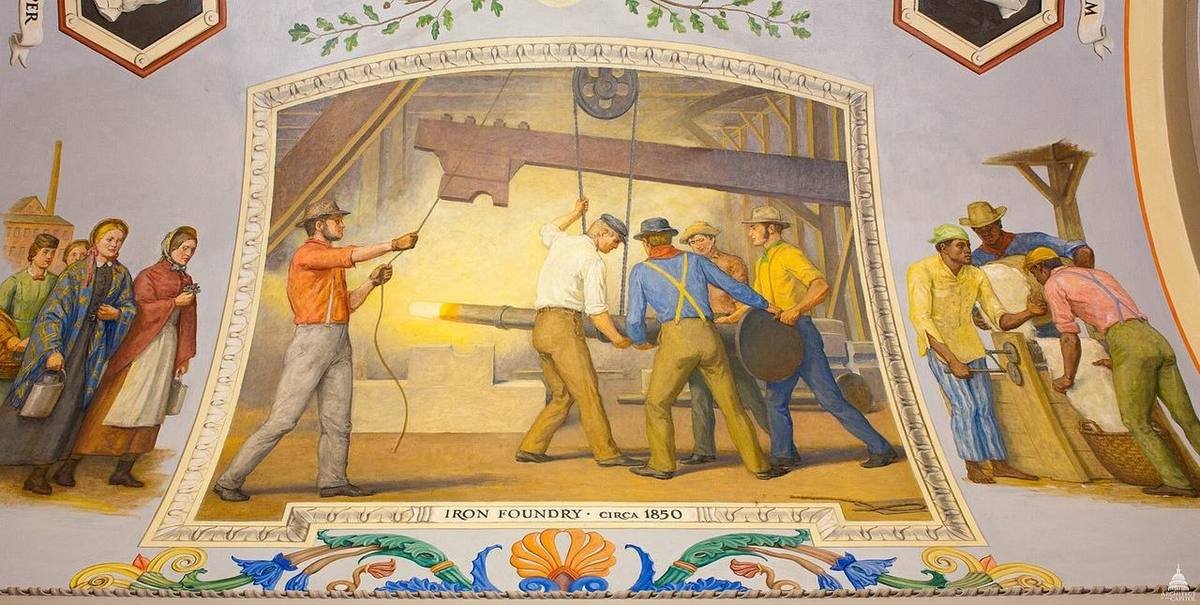
    A mural depicting workers in a nineteenth-century iron foundry, the trade in which National Labor Union leader William H. Sylvis worked.
    A mural depicting workers in a nineteenth-century iron foundry, the trade in which National Labor Union leader William H. Sylvis worked.Image: Architect of the Capitol · Public domain
  2. Knights of Labor

    Labor proves it can organize on a mass scale

    The action
    The Knights organized skilled and unskilled workers under one umbrella and reached across racial and gender lines to a degree unusual for a nineteenth-century national organization.
    The result
    Their 1885 Wabash victory restored wages and returned strikers without retaliation. Membership surged from about 110,000 to roughly 720,000—but the larger 1886 Southwest strike ended in defeat.
    What endured
    They demonstrated broad worker solidarity while leaving a warning: their inclusiveness was incomplete, and anti-Chinese nativism was a profound contradiction.
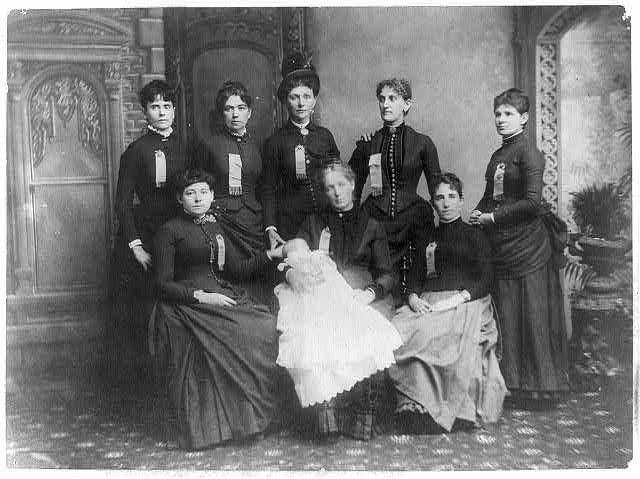
    Women delegates to the Knights of Labor convention in Richmond, Virginia, in 1886.
    Women delegates to the Knights of Labor convention in Richmond, Virginia, in 1886.Image: Library of Congress · Public domain
  3. The railroad wars

    Whoever controlled the rails could stop the country

    The action
    After repeated wage cuts during the Long Depression, railroad workers in Martinsburg stopped freight trains. The action raced along the rail network. Coal miners, ironworkers, longshoremen, mill hands, and entire communities joined what became the first multi-state strike—and, in places such as St. Louis, something close to a general strike.
    The result
    Police, state militias, and federal troops reopened the railroads. Estimates run as high as one hundred people killed nationwide in 1877 alone. The wage cuts remained and workers won no national settlement.
    What endured
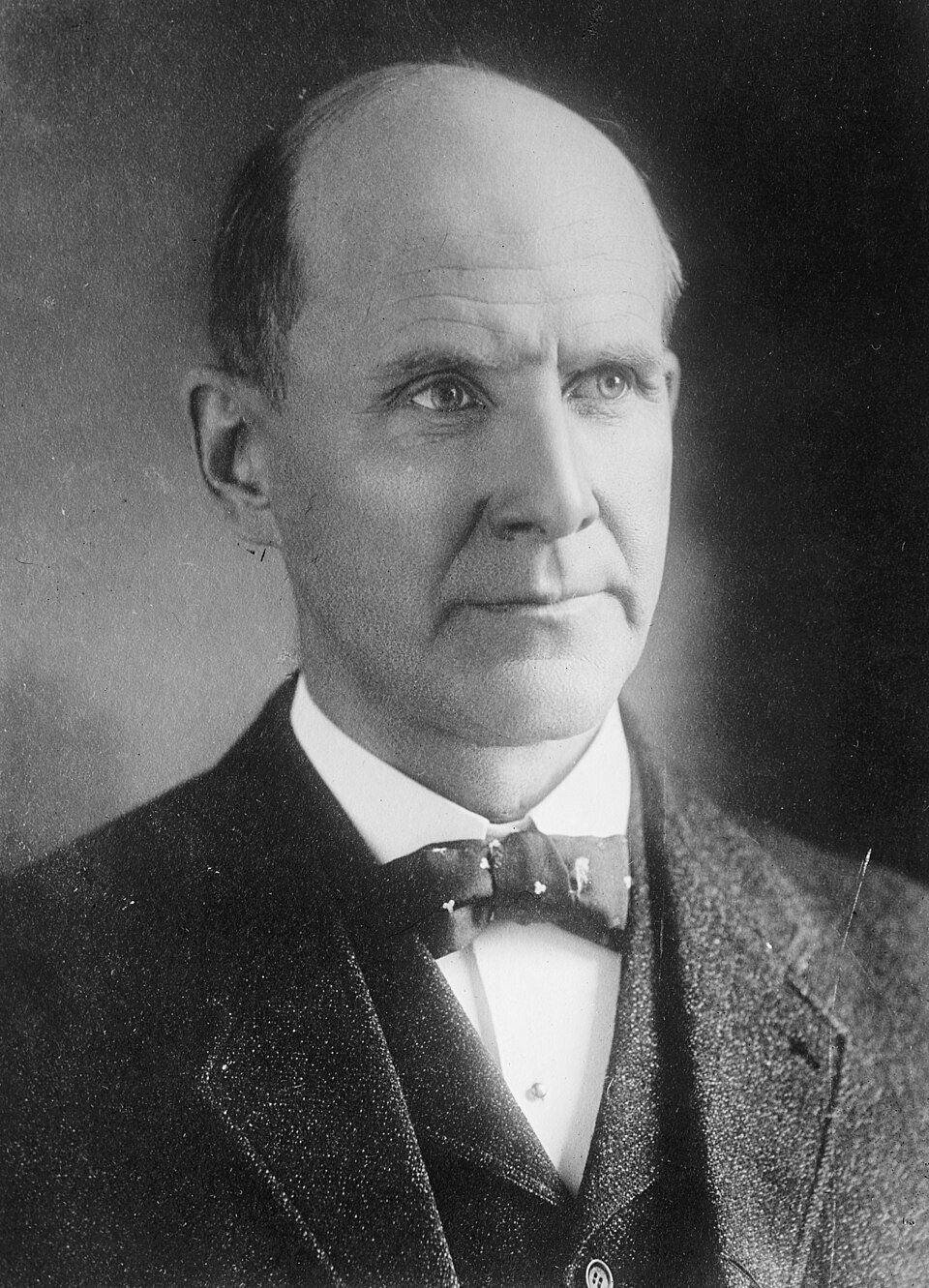
    The conflict continued through the Knights of Labor’s 1885 Wabash victory, its defeat in the 1886 Great Southwest strike, and the federal suppression of the 1894 Pullman boycott led by Eugene V. Debs and the American Railway Union. Rail workers repeatedly proved they could halt a national system; corporations and government repeatedly demonstrated the force they could assemble to restart it.
    Formal seated portrait of Eugene V. Debs in a dark suit and bow tie.
    Eugene V. Debs, a founding member of the Industrial Workers of the World (IWW), circa 1912.Image: Bain News Service via the Library of Congress · Public domain
  4. The Haymarket Massacre

    Police break up a peaceful labor rally—and the state puts a movement on trial

    The action
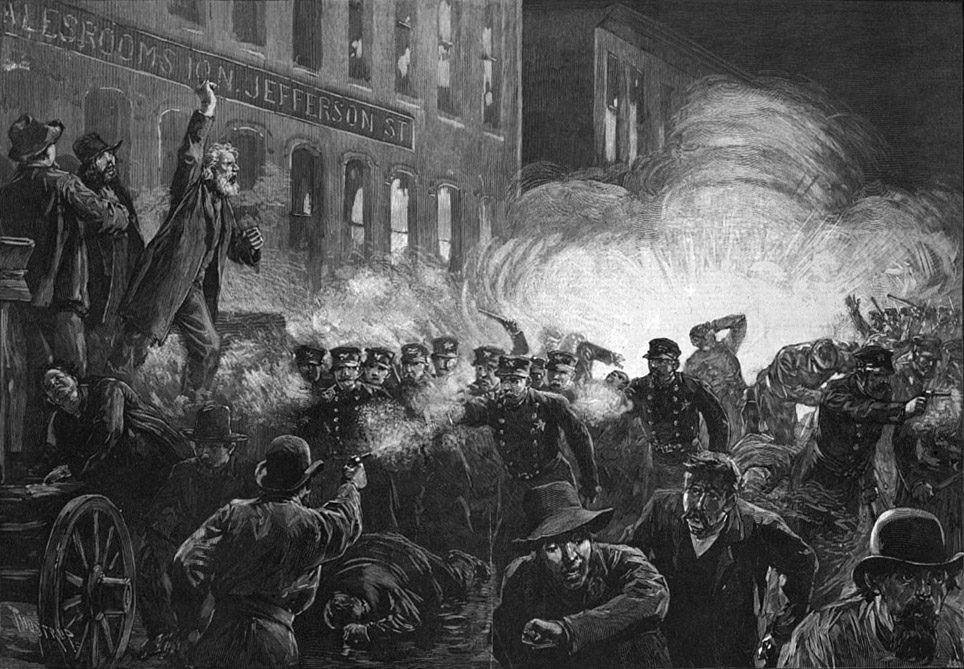
    Hundreds of thousands joined the national movement for an eight-hour day. On May 3, Chicago police fired on striking McCormick workers, killing at least two. The next evening’s Haymarket meeting was called to protest those killings. It remained peaceful and was already dwindling when 176 officers marched in and ordered it dispersed.
    The result
    An unidentified person threw a bomb, killing one officer immediately. Police then fired wildly into the crowd. Seven officers and at least four workers ultimately died; some officers were likely struck by police fire. Authorities never identified the bomber, yet eight radicals were prosecuted for their beliefs and associations. Four were hanged, one died in prison, and the surviving defendants were later pardoned after Illinois Governor John Altgeld condemned the trial.
    What endured
    Haymarket became an international symbol of the price workers paid for demanding eight hours for work, eight hours for rest, and eight hours for themselves. May 1 became International Workers’ Day. The U.S. September Labor Day grew from a separate 1882 New York celebration and became federal law in 1894.
    An 1886 wood engraving depicting the bomb explosion and police response at Haymarket Square.
    An 1886 wood engraving depicting the bomb explosion and police response at Haymarket Square.Image: Thure de Thulstrup, Harper’s Weekly · Public domain
  5. American Federation of Labor

    A narrower model builds durable bargaining power

    The action
    The AFL federated autonomous craft unions and focused on organization, strikes, wages, hours, and working conditions.
    The result
    Its 1886 and 1890 campaigns helped skilled trades win shorter hours and kept eight hours on the national agenda.
    What endured
    The structure proved durable, but its craft focus often left unskilled workers, women, Black workers, and immigrants outside its strongest organizations.
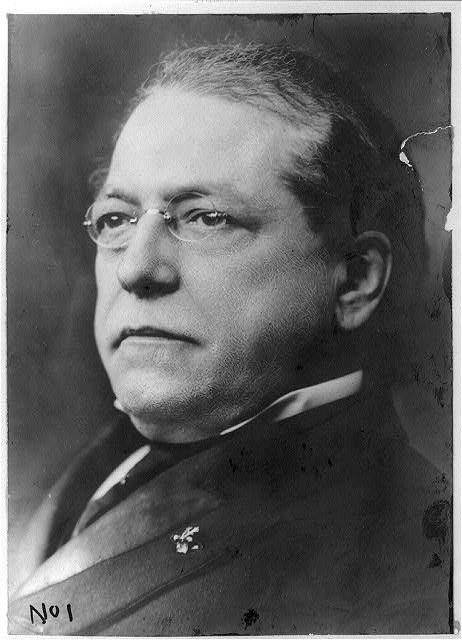
    Head-and-shoulders portrait of Samuel Gompers wearing glasses.
    Samuel Gompers, founding president of the American Federation of Labor.Image: Library of Congress · Public domain

The price of resistance

The sacrifice came first.

Economic pressure explains why conflicts began; it does not erase the choices made inside them. Workers were not always peaceful and were not always only victims. But private guards, police, militias, courts, and federal troops repeatedly answered organization with overwhelming force.
  1. Homestead

    A lockout becomes a battle over control of the mill

    The action
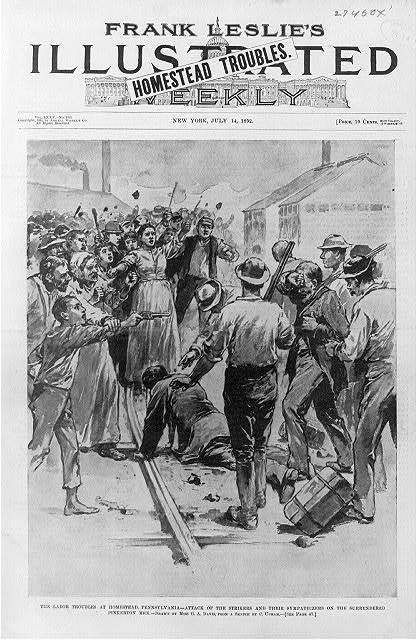
    After contract talks failed, Carnegie Steel’s Henry Clay Frick locked out the workforce, fortified the Homestead mill, and sent Pinkerton agents by river to take control. Armed workers and townspeople confronted them.
    The result
    A daylong battle killed Pinkertons and workers. The Pinkertons surrendered, but Pennsylvania militia occupied the town and protected replacement workers. The strike collapsed and the union was broken.
    What endured
    Homestead showed that workers could control an industrial community—and that an employer with state support could outlast and dismantle even a powerful union.
    An 1892 illustration of surrendered Pinkerton agents being escorted past strikers and townspeople at Homestead.
    An 1892 illustration of surrendered Pinkerton agents being escorted past strikers and townspeople at Homestead.Image: G. A. Davis and C. Upham via the Library of Congress · Public domain
  2. Triangle Shirtwaist Factory fire

    One hundred forty-six workers die in eighteen minutes

    The action
    Most Triangle workers were young Jewish and Italian immigrant women and girls working long hours in crowded rooms surrounded by flammable cloth. Many had joined the 1909 Uprising of the 20,000 and returned to a factory where fundamental safety hazards remained.
    The result
    When fire reached the ninth floor, workers found one stairway door locked. There was no alarm they could use, machinery and smoke obstructed escape, the fire escape collapsed, and firefighters’ ladders could not reach them. One hundred forty-six workers died from fire, smoke, falls, or desperate jumps from the windows.
    What endured
    Public mourning became public action. New York’s Factory Investigating Commission drove sweeping safety reforms. Frances Perkins witnessed the fire and carried its lessons into the New Deal. The protections came only after 146 workers had already paid for them.
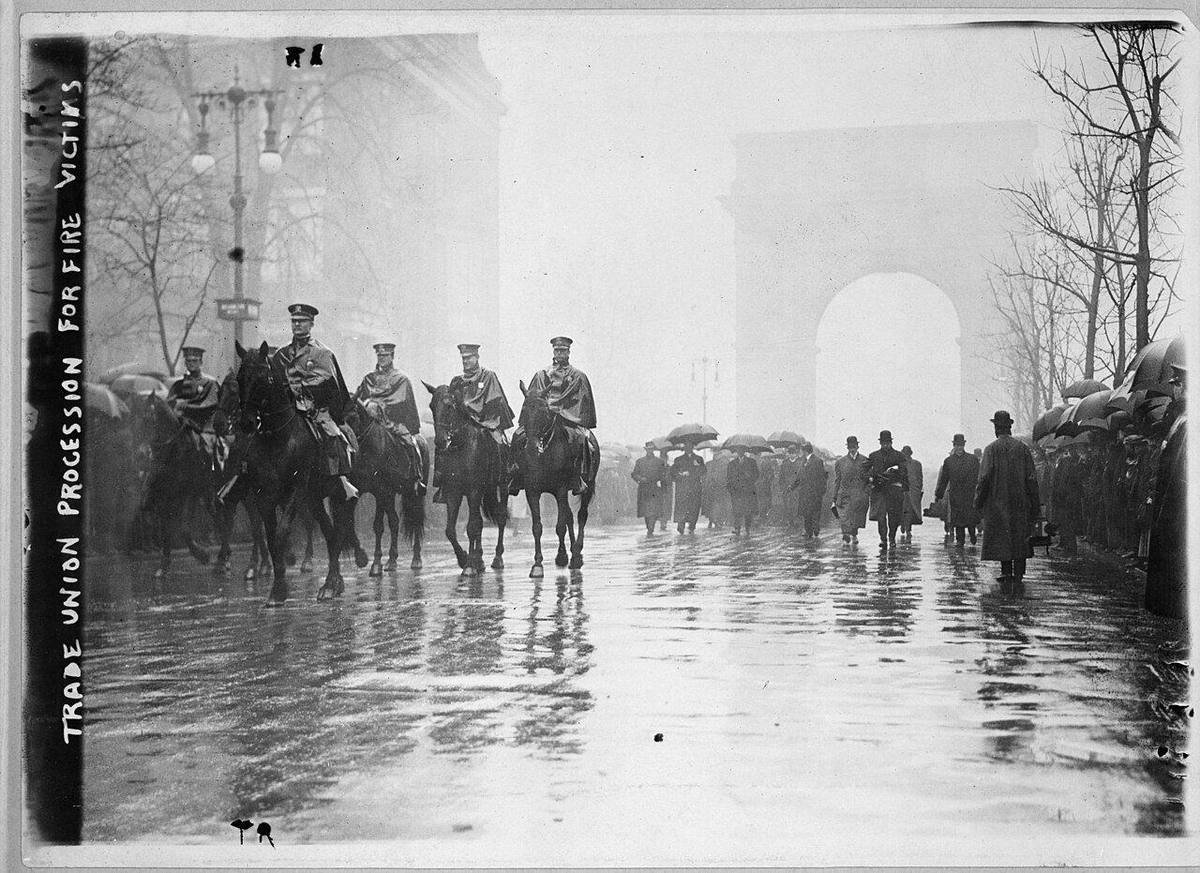
    A trade union memorial procession for the victims of the Triangle Shirtwaist Factory fire in 1911.
    A trade union memorial procession for the victims of the Triangle Shirtwaist Factory fire in 1911.Image: Bain News Service via the Library of Congress · Public domain
  3. Lawrence textile strike

    Workers divided by language organize as one

    The action
    After a new state law shortened the workweek, mill owners cut weekly pay. Immigrant textile workers—many of them women—organized across more than two dozen language groups and kept the mills from operating.
    The result
    After two months, workers won wage increases, overtime improvements, and protection against retaliation. Other New England textile employers raised wages to prevent the strike from spreading.
    What endured
    Lawrence proved that workers dismissed as too divided, too transient, or too unskilled to organize could build solidarity across an entire city.
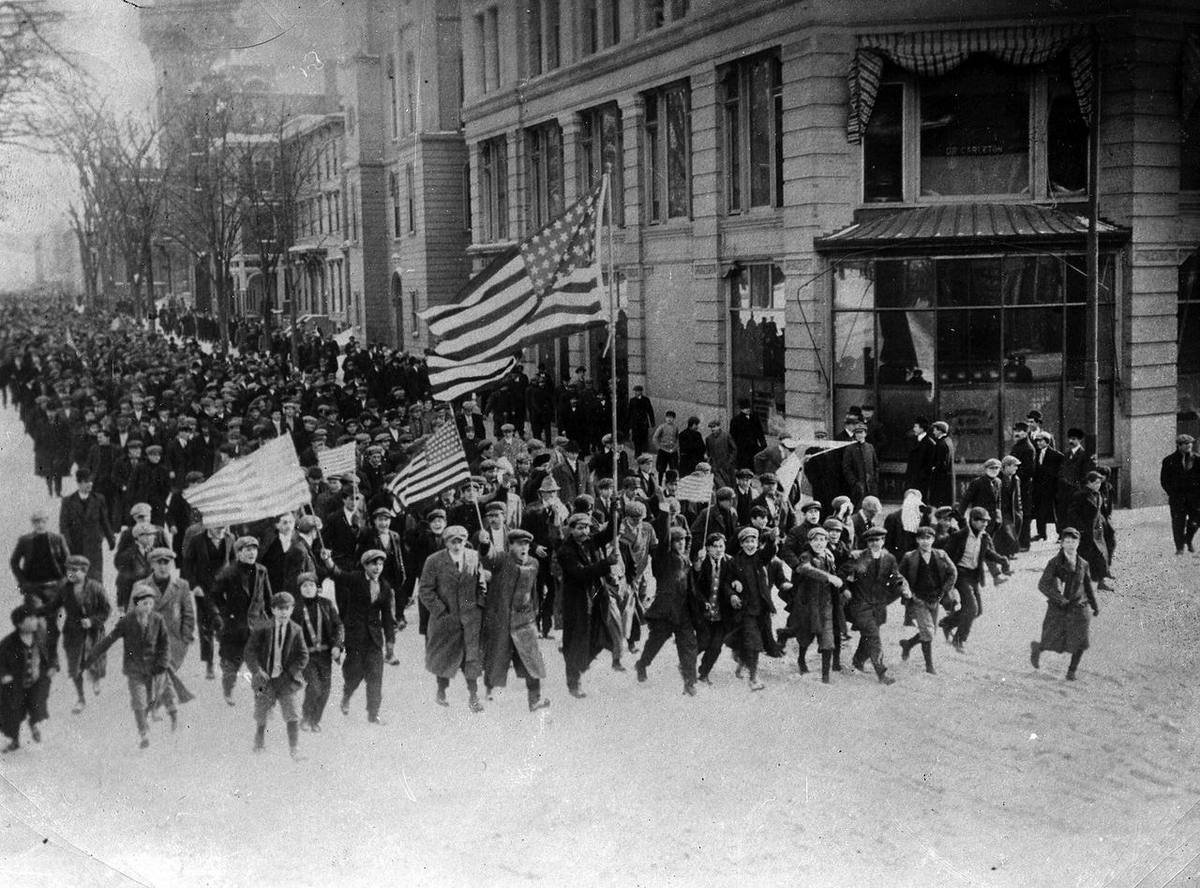
    A large procession of textile strikers marching through Lawrence, Massachusetts, in 1912.
    A large procession of textile strikers marching through Lawrence, Massachusetts, in 1912.Image: Unknown photographer · Public domain
  4. The Ludlow Massacre

    A strike against company rule ends with children beneath a burning tent

    The action
    Colorado miners demanded recognition, enforcement of mining laws, an eight-hour day, honest weighing of coal, and freedom from compulsory company housing, stores, doctors, and guards. United Mine Workers organizers, including Mother Jones, helped carry their cause beyond the coalfields. After striking, miners and their families were evicted and moved into union tent colonies. Both miners and company-aligned forces armed themselves as the conflict escalated.
    The result
    On April 20, Colorado National Guardsmen and company-aligned guards attacked the Ludlow colony. The camp burned. Twenty-one people were killed, including eleven children. Two women and those children died in a cellar beneath a burning tent. Strike leader Louis Tikas and two other men were killed. Ten more days of warfare followed; the strike still ended in defeat.
    What endured
    No one was meaningfully held responsible. Yet national outrage, congressional investigation, and the memory of the families at Ludlow made the human cost of company rule impossible to dismiss.
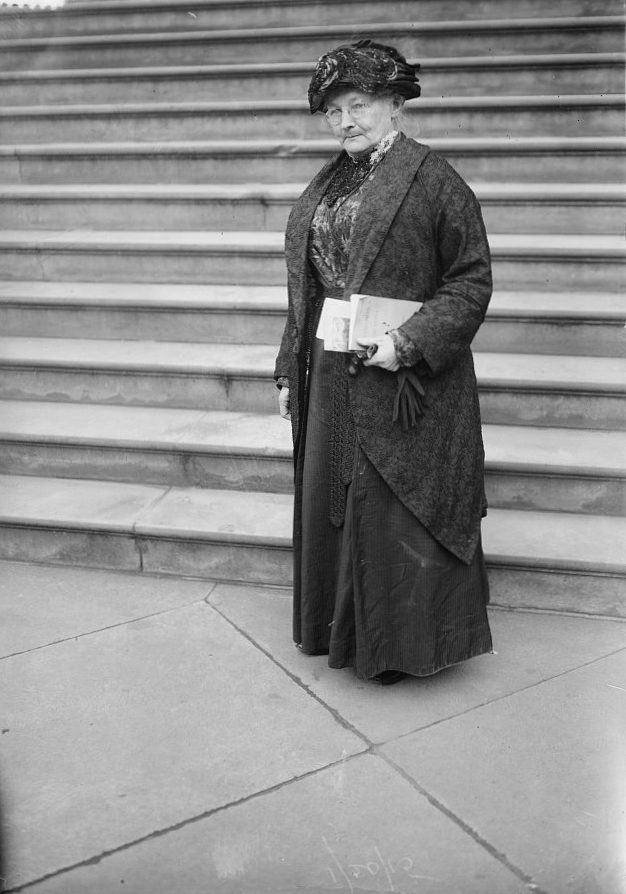
    Portrait of Mother Jones wearing a dark coat and hat.
    Mary “Mother” Jones, labor organizer and advocate for miners and their families, 1915.Image: Bain News Service via the Library of Congress · Public domain
  5. Battle of Blair Mountain

    Coal miners confront a system that governed nearly every part of life

    The action
    Thousands of armed union miners marched toward southern West Virginia coalfields where company power, martial law, arrests, and violence had blocked organizing.
    The result
    After days of fighting against forces backed by mine operators, federal troops intervened and the miners surrendered. Union membership in the region collapsed in the short term.
    What endured
    Blair Mountain exposed company rule as a democratic crisis. The fields were not fully organized until the New Deal gave workers stronger legal protection.
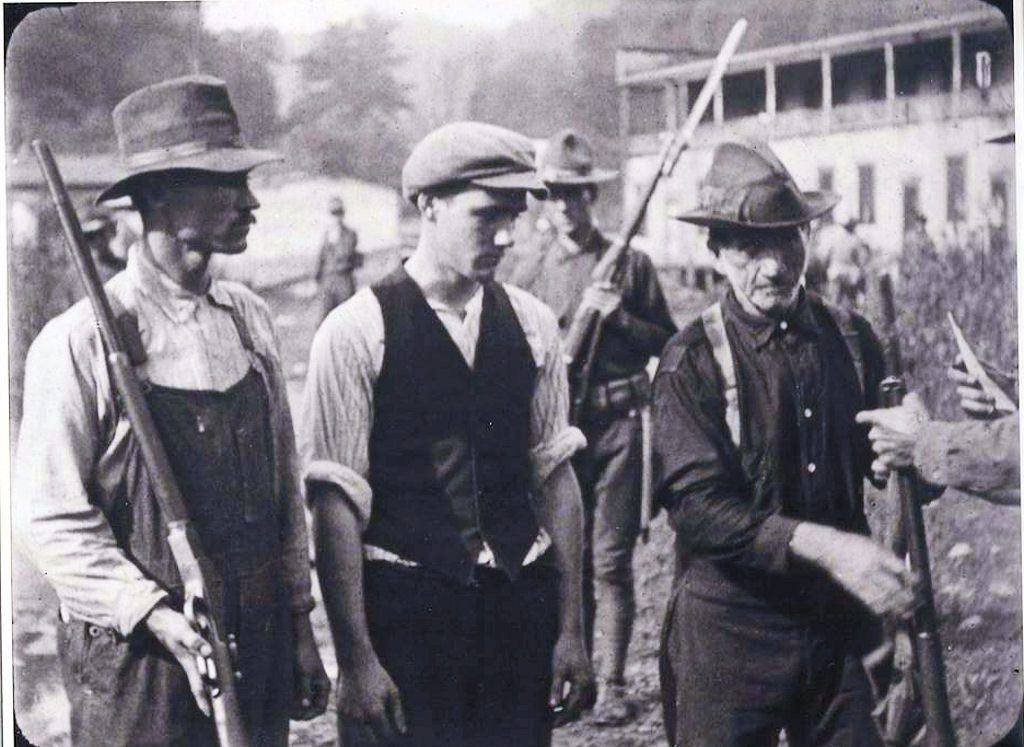
    Union miners surrendering rifles to federal soldiers after the Battle of Blair Mountain in 1921.
    Union miners surrendering rifles to federal soldiers after the Battle of Blair Mountain in 1921.Image: Kinograms · Public domain

Action becomes enforceable

Movements turn demands into standards that can endure.

No single law completed the work. Organizing, contracts, strikes, elections, and public policy reinforced one another—and every gain arrived with limits.
  1. Railroad eight-hour victory

    The credible threat of a national strike moves Congress

    The action
    Four railroad brotherhoods prepared a nationwide strike after negotiations for an eight-hour day failed.
    The result
    Congress passed the Adamson Act before the strike date, establishing eight hours for covered interstate railroad workers. The Supreme Court upheld it in 1917.
    What endured
    The victory gave the decades-old demand a powerful national precedent in private industry.
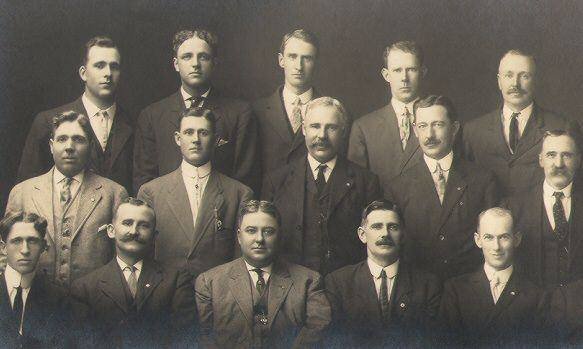
    Members of the Brotherhood of Railroad Trainmen gathered in 1910.
    Members of the Brotherhood of Railroad Trainmen gathered in 1910.Image: Tulsa City-County Library via DPLA · Public domain
  2. Wagner Act

    Collective bargaining becomes national policy

    The action
    Years of organizing and industrial conflict forced the question of workers’ freedom to organize into federal policy.
    The result
    The National Labor Relations Act protected concerted activity and created a federal process for many private-sector workers to choose representation and bargain.
    What endured
    Workers gained an enforceable route to recognition—but agricultural workers, domestic workers, public employees, supervisors, and others remained outside its principal protections.
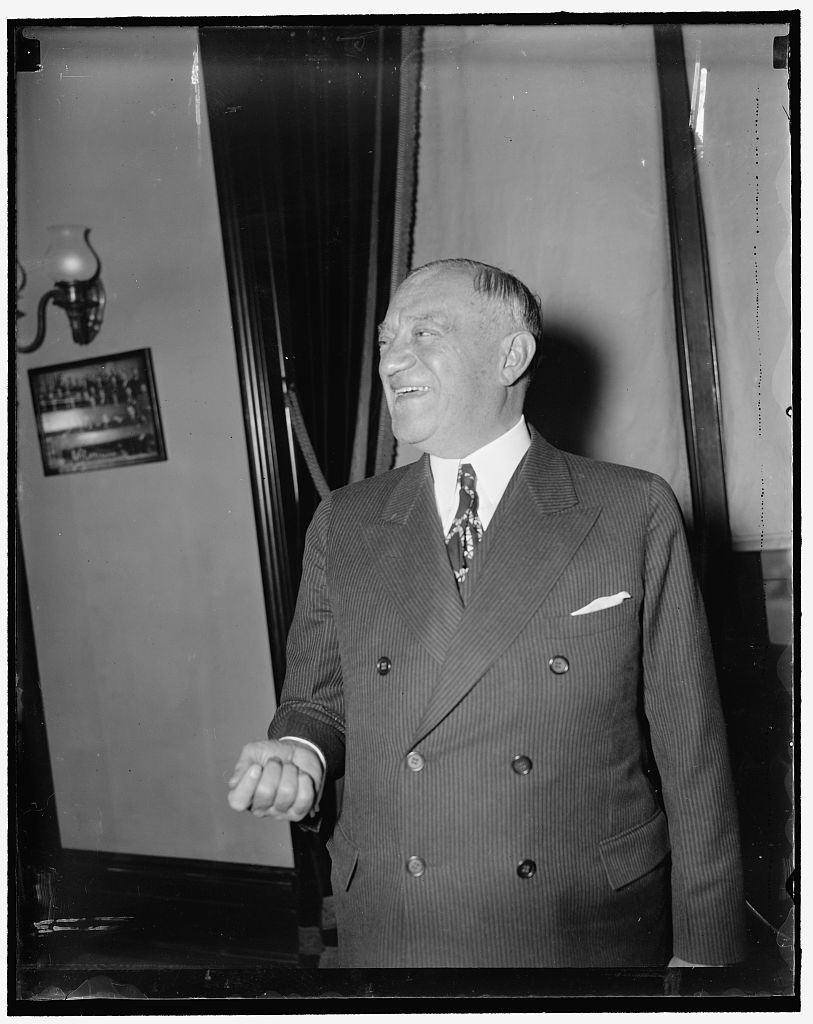
    Senator Robert F. Wagner standing outside the United States Supreme Court in 1937.
    Senator Robert F. Wagner, principal sponsor of the National Labor Relations Act, 1937.Image: Harris & Ewing via the Library of Congress · Public domain
  3. Flint sit-down strike

    Workers hold the plant and win recognition

    The action
    Autoworkers occupied key General Motors plants, preventing machinery and production from being moved while supporters sustained them outside.
    The result
    After forty-four days, GM recognized the UAW as the bargaining representative in the struck plants, accelerating industrial union growth.
    What endured
    Flint showed that mass-production workers across job classifications could organize an industrial system, helping open the CIO era.
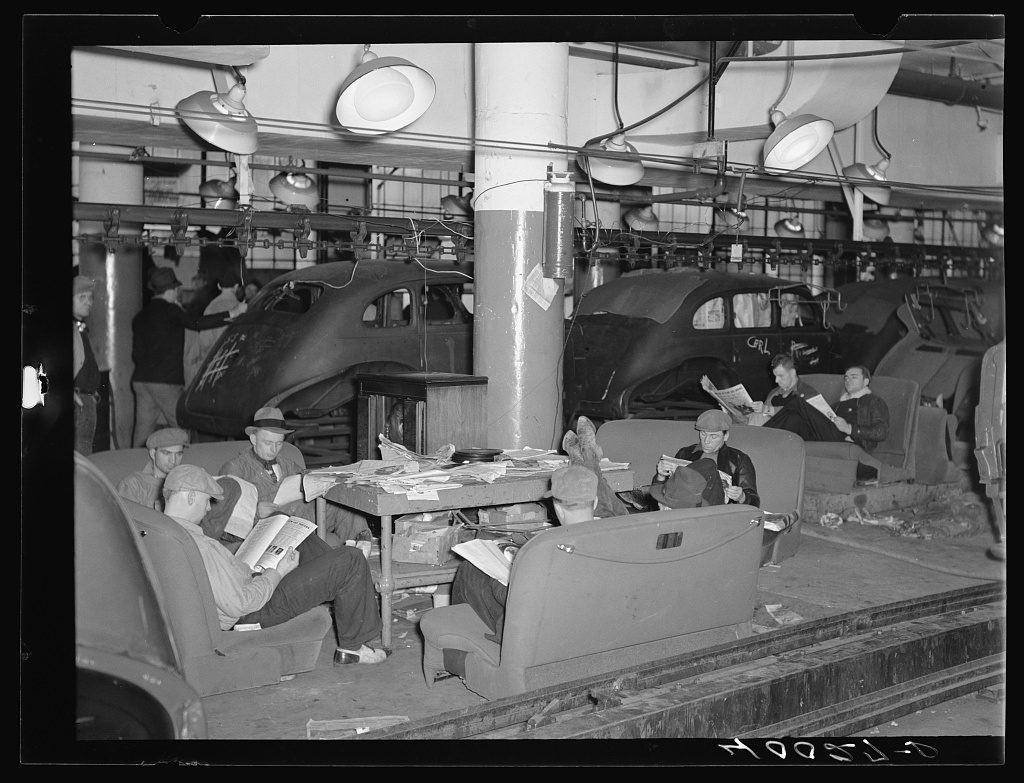
    Workers inside a General Motors plant during the Flint sit-down strike.
    Workers inside a General Motors plant during the Flint sit-down strike.Image: Sheldon Dick via the Farm Security Administration · Public domain
  4. Forty hours and overtime

    A movement’s demand becomes a national floor

    The action
    Organized labor and reformers pressed for federal wage-and-hour standards after decades of local victories, evasions, and judicial resistance.
    The result
    The Fair Labor Standards Act established minimum wages, overtime, and child-labor protections for covered workers. Its maximum week began at forty-four hours and phased down to forty.
    What endured
    The law made forty hours a national benchmark and time-and-a-half the consequence for covered work beyond it, while exclusions left the standard incomplete.
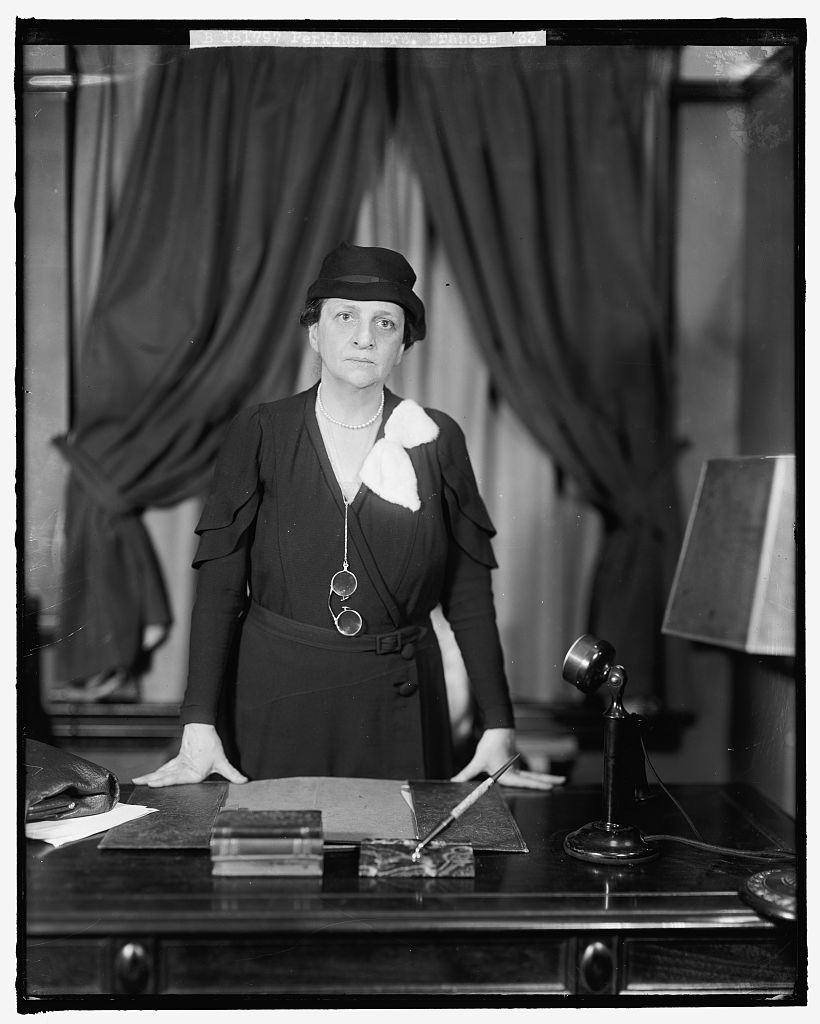
    Head-and-shoulders portrait of Frances Perkins wearing a dark hat.
    Frances Perkins, U.S. secretary of labor and a central architect of federal wage-and-hour protections.Image: Harris & Ewing via the Library of Congress · Public domain
  5. Paid time and negotiated security

    Unions bargain beyond the paycheck

    The action
    Industrial unions increasingly negotiated paid holidays, paid vacations, shift differentials, seniority, pensions, health coverage, and dependable grievance procedures.
    The result
    Benefits once available to relatively few workers spread through union contracts and influenced expectations beyond organized workplaces.
    What endured
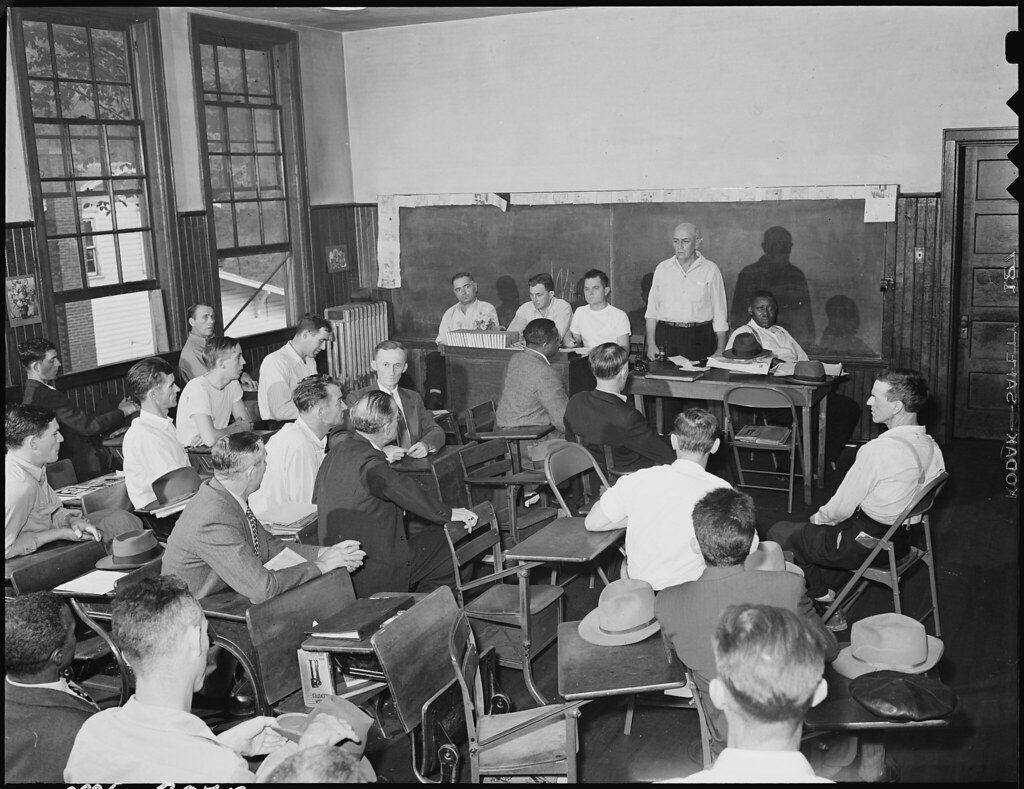
    Paid time away remains a clear bargaining achievement: federal law still does not generally require paid vacation, sick leave, or holidays.
    Members of a United Mine Workers local holding a Sunday union meeting in a Kentucky schoolhouse during the 1940s.
    Members of a United Mine Workers local holding a Sunday union meeting in a Kentucky schoolhouse during the 1940s.Image: Russell Lee via the National Archives · Public domain
  6. Taft–Hartley

    The law protects organizing—and restricts union power

    The action
    A postwar strike wave triggered a political counteroffensive against the expanded labor movement.
    The result
    Congress preserved core Section 7 rights while restricting union practices, authorizing state right-to-work laws, excluding supervisors, and reshaping enforcement.
    What endured
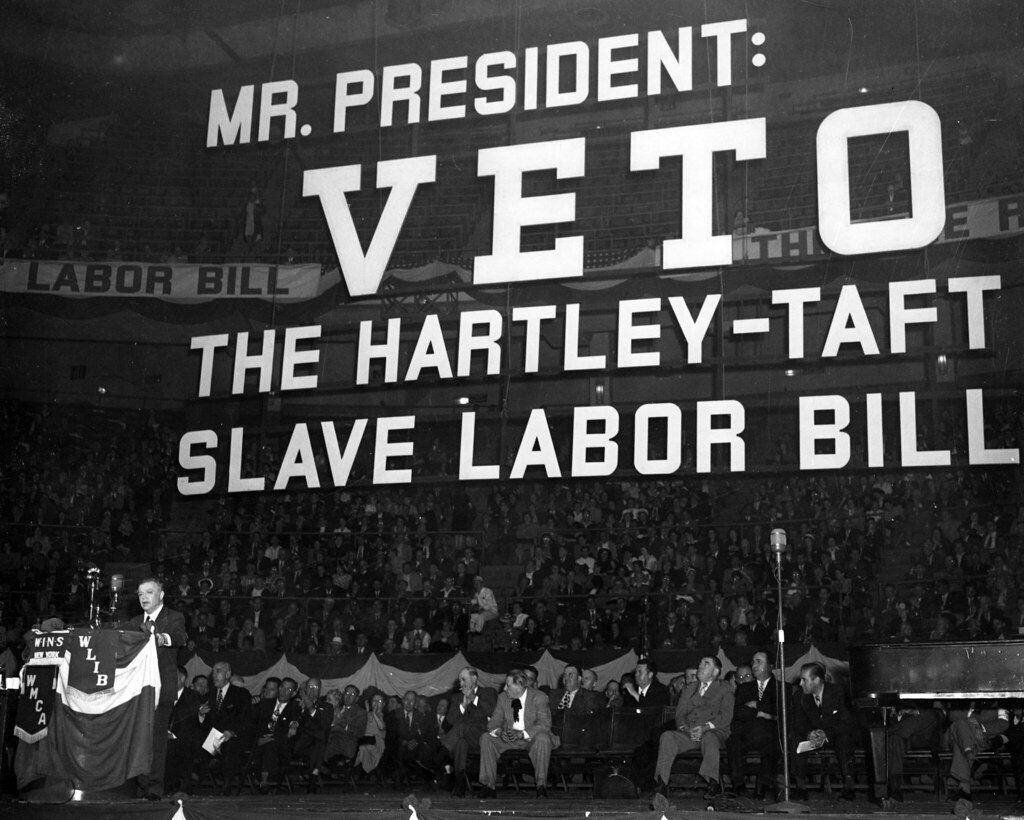
    Modern workers inherited not a finished right but a contested framework whose protections and limitations still shape organizing.
    International Ladies’ Garment Workers’ Union president David Dubinsky speaking against the Taft–Hartley bill in 1947.
    International Ladies’ Garment Workers’ Union president David Dubinsky speaking against the Taft–Hartley bill in 1947.Image: Kheel Center, Cornell University Library · CC BY 2.0
  7. Memphis sanitation strike

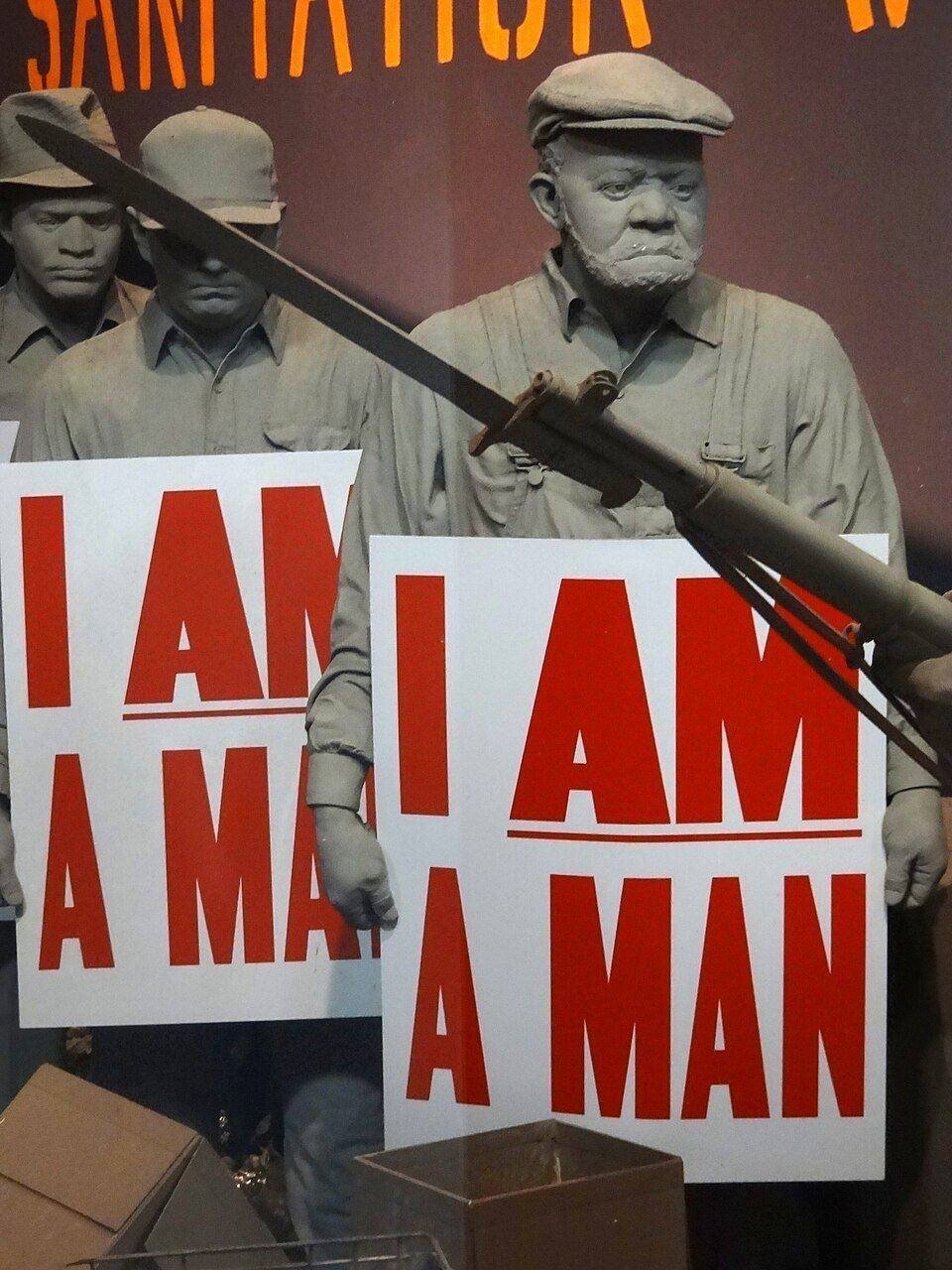
    “I AM A MAN” joins labor rights to civil rights

    The action
    More than 1,300 Black sanitation workers struck after years of dangerous conditions, poverty wages, racial disrespect, and the deaths of Echol Cole and Robert Walker.
    The result
    After sixty-five days, the city recognized AFSCME Local 1733 and agreed to wage increases and dues checkoff.
    What endured
    The campaign made workplace dignity inseparable from racial justice and demonstrated that recognition itself is a civil right when workers are denied a voice.
    A National Civil Rights Museum installation recreating the Memphis sanitation workers’ march with I AM A MAN signs.
    A National Civil Rights Museum installation recreating the Memphis sanitation workers’ march with I AM A MAN signs.Image: Adam Jones · CC BY-SA 3.0
  8. Occupational Safety and Health Act

    Safety becomes an enforceable national responsibility

    The action
    Workers, unions, researchers, and reformers documented the human cost of industrial injury, disease, and death and demanded public standards.
    The result
    The OSH Act created a nationwide federal program and the Occupational Safety and Health Administration.
    What endured
    A safe workplace became more than an employer’s private promise: workers gained standards, inspections, and an enforcement system.
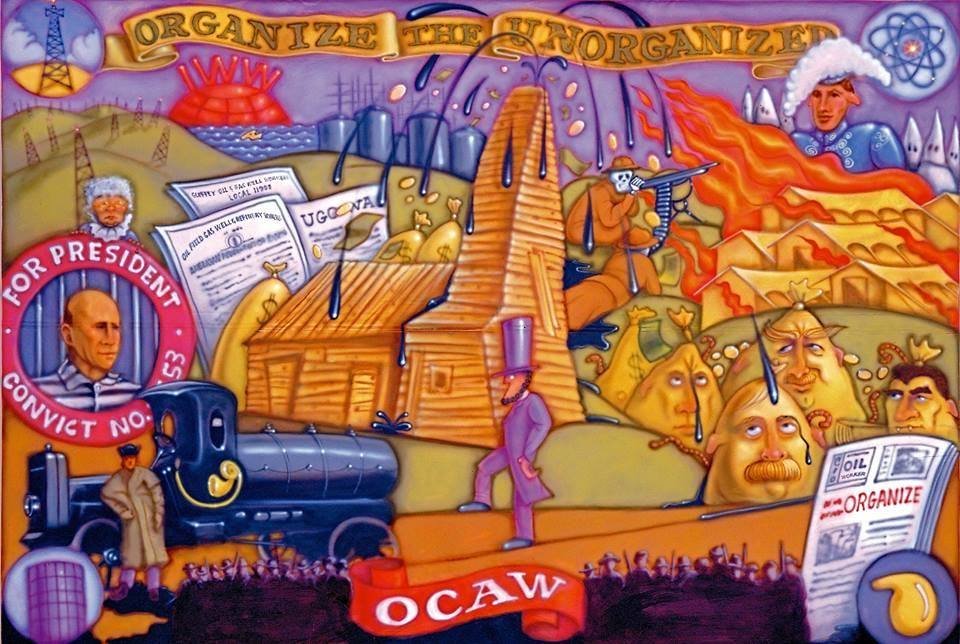
    A mural about the history of the Oil, Chemical and Atomic Workers union, showing workers, industrial hazards, and the words Organize the Unorganized.
    A mural about the history of the Oil, Chemical and Atomic Workers union, showing workers, industrial hazards, and the words Organize the Unorganized.Image: Mike Alewitz · CC BY-SA 4.0

Rights can be won—and weakened

The law changed. The struggle over power did not.

The victories of the twentieth century were not a permanent settlement. Workers kept organizing, while employers, courts, lawmakers, and presidents continued to reshape the balance of power.
  1. The Great Postal Strike

    Federal workers break the law—and force the government to bargain

    The action
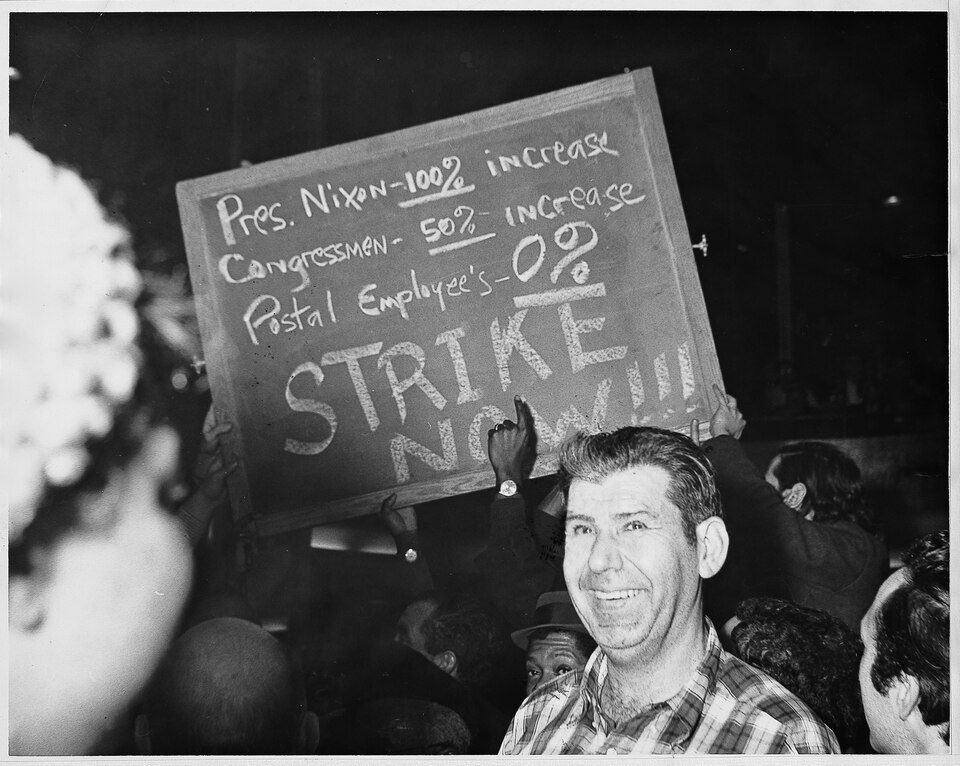
    New York letter carriers walked out over poverty-level starting pay and a system that left them little control over their working lives. Although federal employees were prohibited from striking, the wildcat action spread to 152,000 postal workers at 671 locations.
    The result
    President Nixon sent troops to move the mail, but the strike held long enough to force negotiations. The Postal Reorganization Act authorized collective bargaining over wages and working conditions, created binding arbitration, and included a 14 percent pay increase.
    What endured
    Postal workers demonstrated that a legal prohibition did not erase collective power. Their action transformed the Post Office Department and secured bargaining rights that postal unions still exercise.
    Postal workers carrying picket signs during the Great Postal Strike of 1970.
    Postal workers carrying picket signs during the Great Postal Strike of 1970.Image: American Postal Workers Union · CC BY-SA 3.0
  2. PATCO

    A president fires a union—and employers hear the signal

    The action
    Air traffic controllers represented by PATCO struck for shorter hours, higher pay, and changes to stressful working conditions. Like the postal workers before them, they were federal employees legally prohibited from striking.
    The result
    President Ronald Reagan ordered them back within forty-eight hours. Roughly 11,000 who did not return were fired, and PATCO was later decertified.
    What endured
    The confrontation did not single-handedly cause union decline, but it marked a decisive political turn. Permanent replacements already existed in labor law; PATCO made aggressive resistance to strikes appear newly acceptable. Deindustrialization, globalization, employer opposition, labor-law weakness, and state policy deepened the losses that followed.
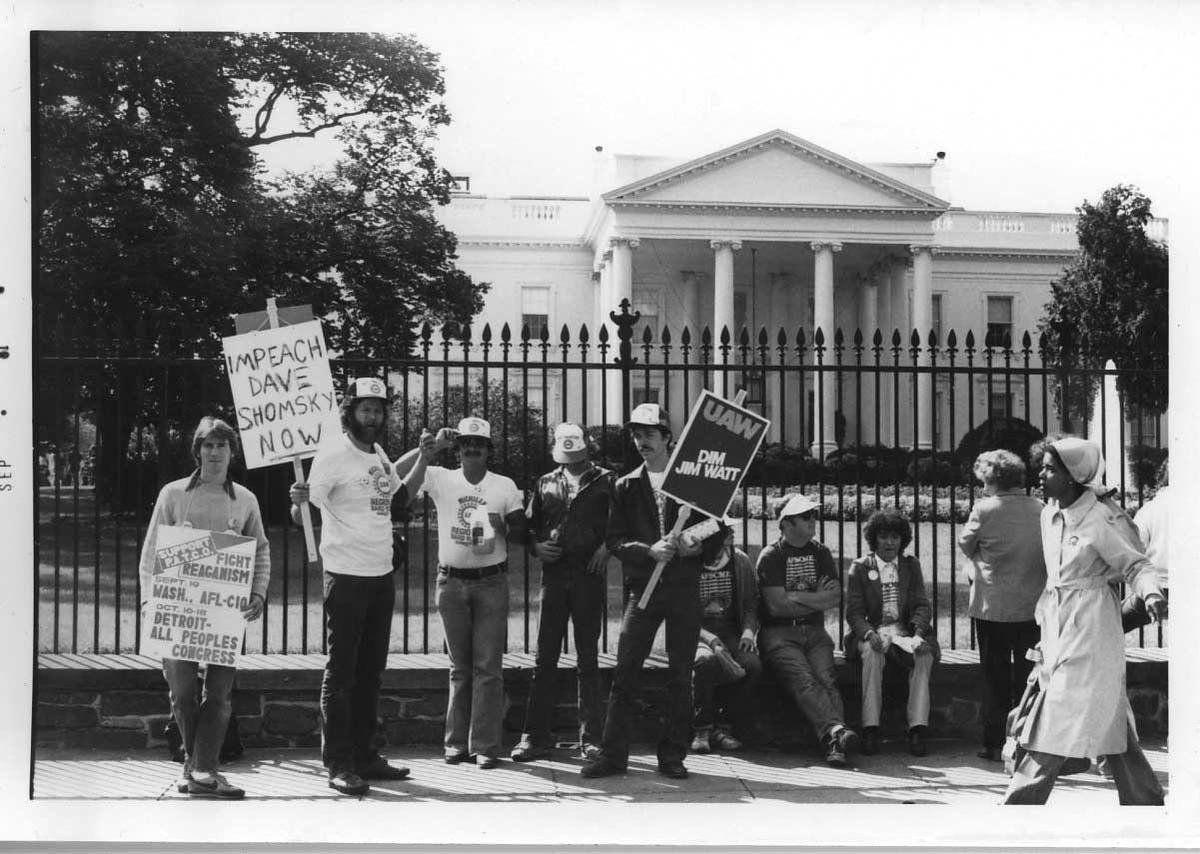
    Union demonstrators holding signs outside the White House during the AFL-CIO Solidarity Day mobilization in September 1981.
    Union demonstrators holding signs outside the White House during the AFL-CIO Solidarity Day mobilization in September 1981.Image: Carptrash · CC BY-SA 3.0
  3. The UPS strike

    Part-time America becomes a national issue

    The action
    About 180,000 Teamsters stopped work at UPS under the banner “Part-Time America Won’t Work.” The strike connected insecure part-time jobs to the future of work across the country.
    The result
    After fifteen days, workers won a contract that included thousands of new full-time jobs, stronger pension protections, and wage increases. UPS remained unionized.
    What endured
    The largest major U.S. work stoppage by worker participation between 1993 and 2025 showed that labor could still organize a national company, command public attention, and win after years of retreat.
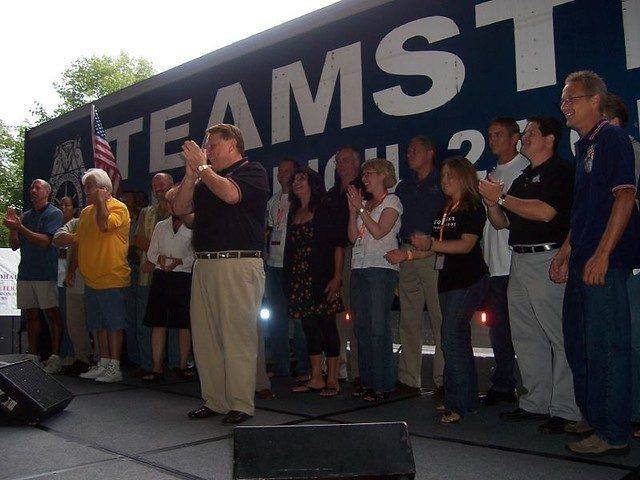
    Teamsters members gathered in 2007, a decade after the UPS strike demonstrated the union’s national reach.
    Teamsters members gathered in 2007, a decade after the UPS strike demonstrated the union’s national reach.Image: Neeta Lind · CC BY 2.0

The thread tightens again

A new generation begins rebuilding collective power.

The revival did not begin in one industry or follow one model. It appeared in classrooms, hospitals, warehouses, coffee shops, universities, newsrooms, museums, hotels, factories, and workplaces once described as impossible to organize.
  1. Red for Ed

    Teachers turn a local crisis into a national wave

    The action
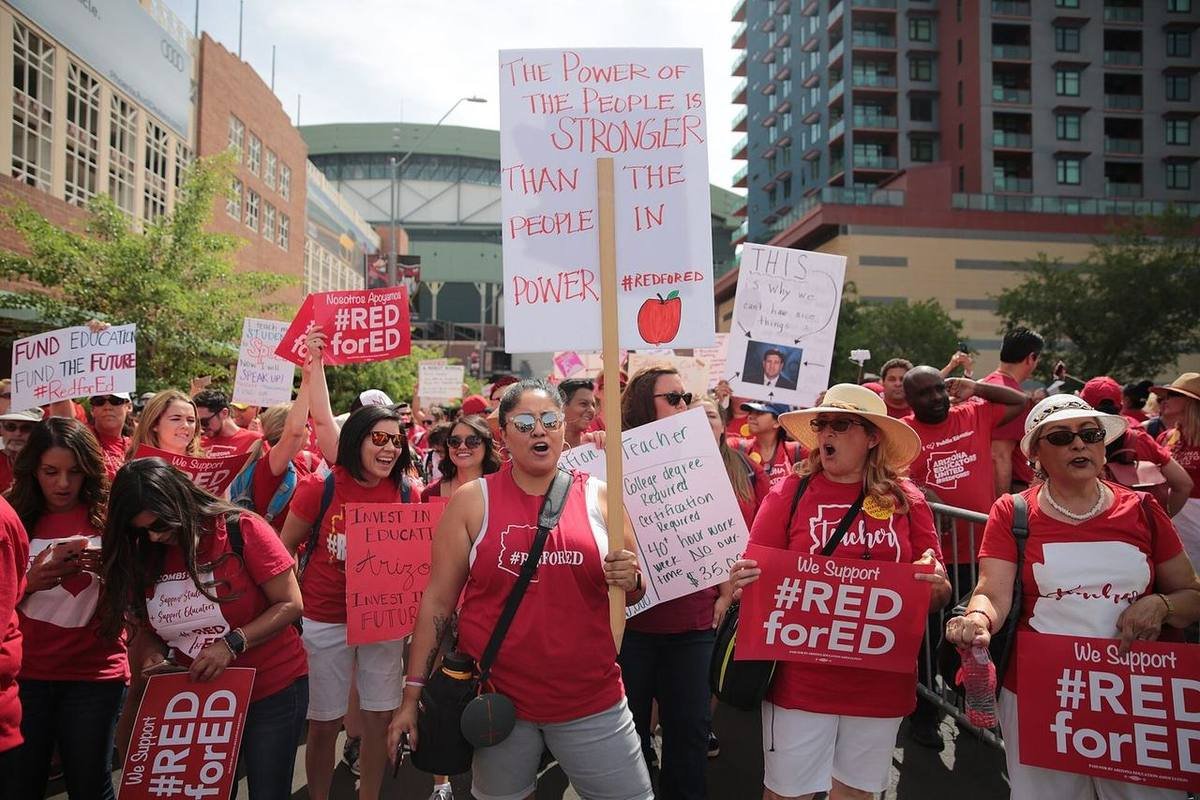
    Educators organized statewide walkouts over pay, school funding, benefits, and classroom conditions—often in states where formal collective-bargaining rights were limited. Parents, students, and communities helped sustain the actions.
    The result
    In 2018 alone, 379,200 education workers participated in major work stoppages. Walkouts won meaningful raises and funding commitments in several states, though many underlying shortages and funding fights remained.
    What endured
    The movement demonstrated that workers could build collective power beyond a conventional contract campaign and made public-service working conditions a community issue.
    Arizona educators and supporters, many dressed in red, filling the grounds outside the state capitol during the April 2018 teacher walkout.
    Arizona educators and supporters, many dressed in red, filling the grounds outside the state capitol during the April 2018 teacher walkout.Image: Gage Skidmore for Arizona Education Association · CC BY 2.0
  2. Organizing reaches new workplaces

    Workers redraw the map of who can form a union

    The action
    Workers in retail, coffee, logistics, higher education, culture, media, technology, and healthcare built organizing committees in workplaces with little recent union history. Many campaigns were led openly by workers themselves.
    The result
    Union-election petitions rose from 1,638 in fiscal year 2021 to 3,286 in 2024—more than doubling in three years. Filings eased to 2,633 election petitions in 2025 but remained about 61 percent above 2021.
    What endured
    Petitions are not contracts, and election victories do not guarantee first agreements. But the increase records something consequential: far more workers are testing collective organization for themselves.
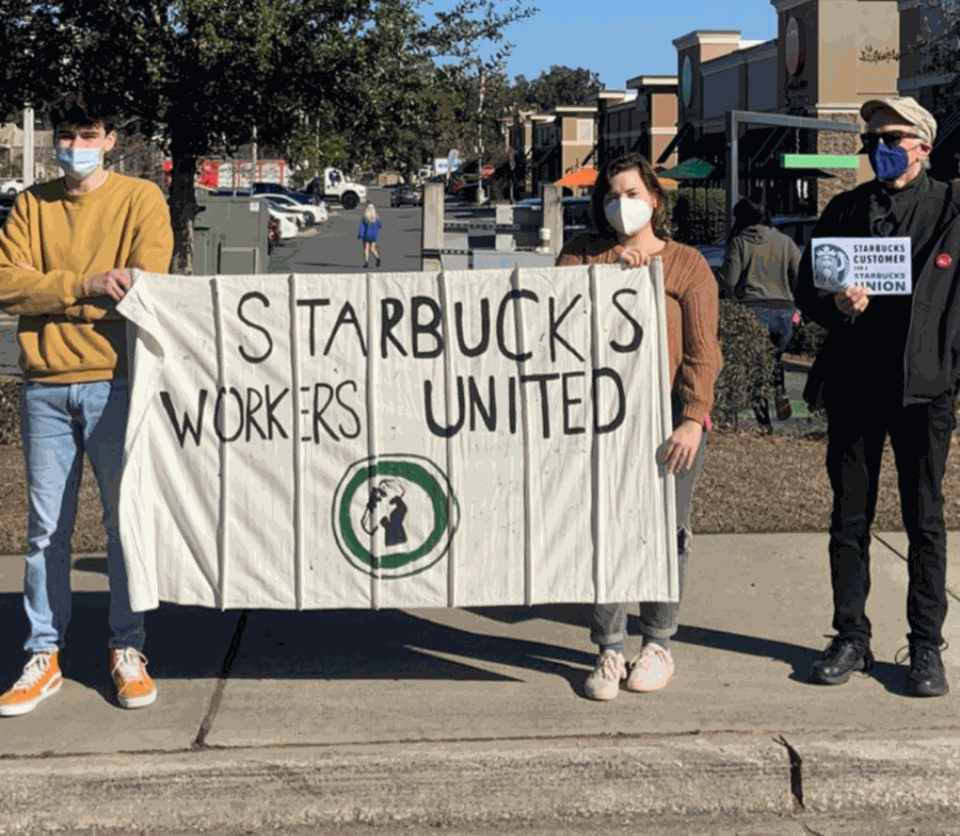
    Starbucks Workers United supporters holding union signs during a 2022 protest in Tallahassee, Florida.
    Starbucks Workers United supporters holding union signs during a 2022 protest in Tallahassee, Florida.Image: Ethan B · CC BY-SA 4.0
  3. Strikes return to public view

    Withholding labor becomes visible again

    The action
    Autoworkers, writers, actors, healthcare workers, hotel workers, educators, and others used strikes and strike threats to press demands over pay, staffing, scheduling, technology, and the distribution of industry gains.
    The result
    The Bureau of Labor Statistics counted 33 major work stoppages in 2023—the most since 2000—followed by 31 in 2024. Its 2025 count involved 306,800 workers. The federal series includes only stoppages involving at least 1,000 workers and lasting at least one full shift, so it does not capture most smaller actions.
    What endured
    A tactic long described as obsolete returned to national view. The renewed activity has produced real victories, but it has not yet rebuilt the broad union reach of the mid-twentieth century.
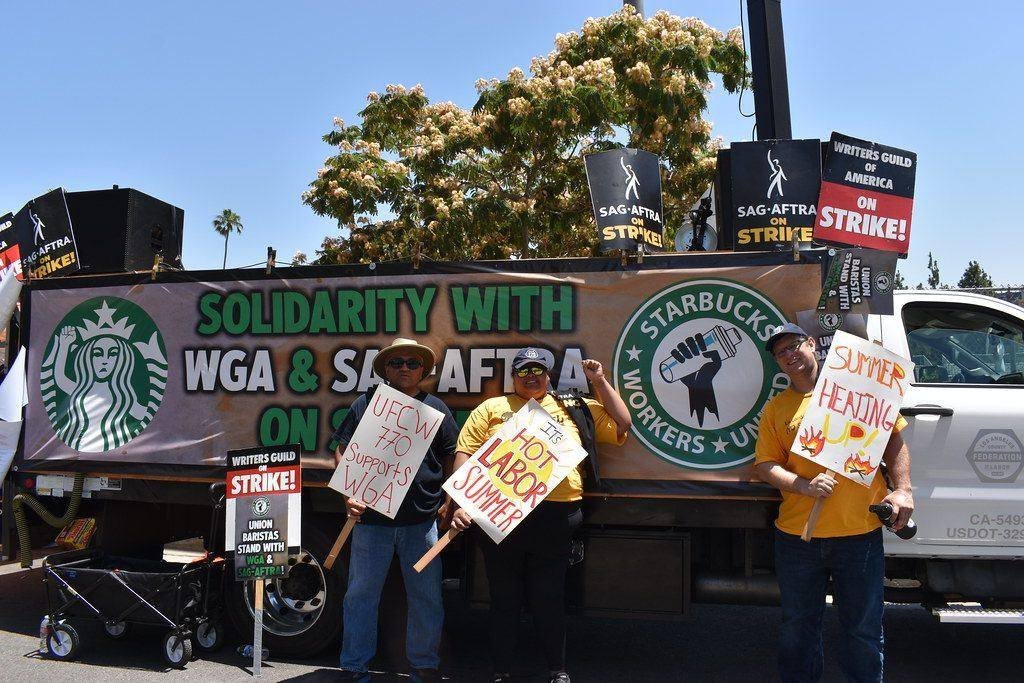
    Members of UFCW Local 770 standing in solidarity with striking writers, actors, and Starbucks workers in 2023.
    Members of UFCW Local 770 standing in solidarity with striking writers, actors, and Starbucks workers in 2023.Image: UFCW Local 770 · CC BY 2.0

The unfinished present

The revival is real. Its outcome is not guaranteed.

Organizing and strike activity have surged, but national membership has not yet recovered. In 2025, 14.7 million workers belonged to unions—10.0 percent of employed wage and salary workers. In 1983, the comparable rate was 20.1 percent.

Union-election petitions in FY2024 compared with FY2021
10.0%Union membership rate in 2025
Bureau of Labor Statistics: Union Members—2025 ↗

The next knot

History does not end here. The thread has reached us.

The workers who built the labor movement did not know whether their actions would become history. Neither do the workers organizing today. The eight-hour day, the forty-hour week, overtime pay, paid time away, safer workplaces, grievance procedures, and collective bargaining were organized into existence. Each victory became a starting point for someone else.

As VES workers, we are the next knot in the thread. We are not waiting to discover what the next chapter says. We are writing it—standing together in our own time and deciding what we will leave for those who come after.

Carry the history into the present.

See what VES workers are asking for and how members keep control of the result.

Back to top